Dealing with a bully can be frustrating, hurtful, and sometimes even intimidating. Whether it’s a classmate making rude comments, a coworker trying to put you down, or an online troll hiding behind a screen, knowing how to respond can make a big difference check more here : 100+ Heartfelt I Miss You Messages for My Love
The good news is that you don’t have to fight back with insults or aggression to stand up for yourself. In many situations, a calm, confident, and assertive response is much more powerful than arguing or losing your temper. A thoughtful reply can show the bully that their words don’t have the reaction they’re hoping for.
In this guide, you’ll discover over 150 responses to bullies for different situations, including school, work, social media, text messages, and everyday life. You’ll also learn why people bully others, how to protect your confidence, and when it’s best to walk away or ask for help.
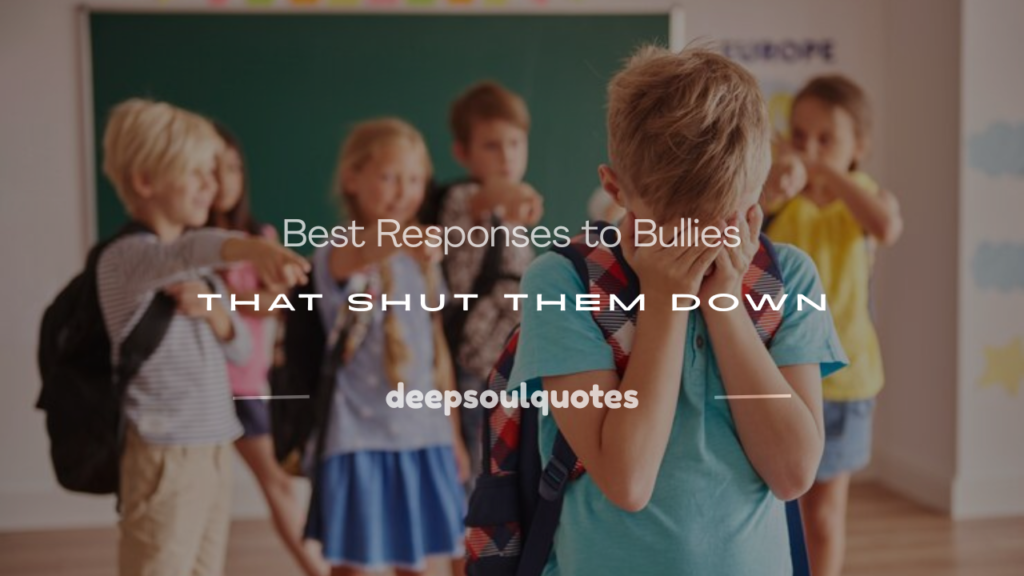
What Is the Best Response to a Bully?
The best response to a bully is one that protects your confidence without making the situation worse. While every situation is different, staying calm, speaking clearly, and refusing to react emotionally often takes away the power a bully is looking for.
A good response should:
- Stay respectful.
- Show confidence.
- Set clear boundaries.
- Avoid unnecessary arguments.
- Keep your safety as the top priority.
Sometimes, the strongest response isn’t a clever comeback at all. It’s calmly walking away, blocking someone online, or reporting repeated bullying to a trusted adult, teacher, manager, or authority.
Remember, standing up for yourself doesn’t mean becoming rude. It means respecting yourself enough not to accept disrespect from others.
Why Bullies Target Others
Many people assume bullies are simply mean, but the reasons behind bullying are often more complicated.
Some people bully because they want attention, power, or control. Others may be dealing with their own insecurities or problems and take those frustrations out on someone else. While these reasons never excuse bullying, understanding them can help you realize that their behavior says more about them than it does about you.
Common reasons people bully include:
- Wanting to feel powerful.
- Peer pressure.
- Jealousy.
- Low self-esteem.
- Seeking attention.
- Trying to fit in with a group.
- Poor emotional control.
- Problems at home or school.
No matter the reason, bullying is never acceptable. Everyone deserves to be treated with kindness and respect.
Different Types of Bullying
Bullying doesn’t always look the same. It can happen face-to-face, online, at school, at work, or even within social groups. Recognizing the type of bullying you’re facing can help you choose the best response.
Verbal Bullying
This includes insults, teasing, name-calling, mocking, or hurtful jokes designed to embarrass or upset someone.
Physical Bullying
Physical bullying involves actions like pushing, hitting, kicking, damaging belongings, or using physical intimidation.
If someone threatens or harms you physically, your safety comes first. Leave the situation if possible and tell a trusted adult, school staff member, manager, or appropriate authority.
Social Bullying
Sometimes called relational bullying, this includes spreading rumors, excluding someone from a group, embarrassing them publicly, or encouraging others to turn against them.
Cyberbullying
Cyberbullying happens through text messages, social media, online games, emails, or messaging apps. It can include hurtful comments, fake accounts, threats, or sharing private information without permission.
Instead of arguing with online bullies, save evidence, block the person, and report abusive behavior when necessary.
Workplace Bullying
Workplace bullying may involve constant criticism, gossip, intimidation, unfair treatment, or attempts to damage someone’s reputation or career.
Professional boundaries, documenting incidents, and speaking with HR or a manager are often better solutions than responding emotionally.
School Bullying
School bullying can happen in classrooms, hallways, cafeterias, playgrounds, or school buses. Students should never feel embarrassed about asking teachers, counselors, or parents for support.
Family Bullying
Sometimes bullying can happen within families through constant insults, humiliation, or controlling behavior. Healthy communication and support from trusted relatives, counselors, or professionals can help address these situations.
Best Responses to Bullies
Not every bully deserves a long speech or a clever comeback. Often, the simplest responses are the most effective because they show confidence without giving the bully the reaction they’re hoping for.
Short Responses to Bullies
These quick replies help you stay calm and confident.
- That’s your opinion.
- I don’t see it that way.
- Okay.
- If you say so.
- I’m not interested in arguing.
- Think what you want.
- I’m moving on.
- That’s enough.
- Have a good day.
- I’m done with this conversation.
- Your opinion doesn’t define me.
- I’ll leave it there.
- I choose not to respond to that.
- Let’s end this here.
- I have better things to focus on.
Calm Responses to Bullies
A calm voice often takes away the bully’s power because they don’t get the emotional reaction they’re expecting.
- I’m not going to argue with you.
- You’re entitled to your opinion.
- Let’s keep this respectful.
- I don’t appreciate being spoken to like that.
- I’m choosing to stay calm.
- We don’t have to agree.
- I hope your day gets better.
- I’m walking away now.
- That comment doesn’t bother me.
- I’m not giving this my energy.
- We can talk when you’re being respectful.
- I don’t need to prove anything.
- I’d rather have a respectful conversation.
- I’m not interested in negativity.
- Let’s leave it at that.
Smart Responses to Bullies
These replies show confidence without sounding aggressive.
- Is that supposed to upset me?
- If that’s how you feel, okay.
- Thanks for sharing your opinion.
- I’m comfortable being myself.
- You don’t know me well enough to judge me.
- I’m not looking for your approval.
- We clearly see things differently.
- I won’t let that affect me.
- I’d rather spend my time on positive people.
- Everyone has different opinions.
- I know who I am.
- Your words don’t change my value.
- I won’t take that personally.
- I choose kindness instead.
- That says more about you than me.
Respectful Responses to Bullies
Being respectful doesn’t mean accepting bad behavior. It means standing up for yourself with maturity.
- Please speak to me respectfully.
- I’d appreciate a kinder conversation.
- There’s no need to be rude.
- I deserve respect just like everyone else.
- Let’s keep this civil.
- I won’t respond to insults.
- We can disagree respectfully.
- I’m happy to talk when we’re both calm.
- I’d rather solve this respectfully.
- I don’t think insulting people helps anyone.
- Let’s treat each other with respect.
- I won’t return the negativity.
- Kindness costs nothing.
- We can do better than this.
- I hope we can move forward respectfully.
Assertive Responses to Bullies
Being assertive means standing up for yourself without being rude or aggressive. An assertive response clearly communicates your boundaries and lets the bully know their behavior isn’t acceptable.
Assertive Responses
- I don’t appreciate being spoken to like that.
- Please stop. That’s not okay.
- I deserve to be treated with respect.
- I’m not going to accept that behavior.
- You don’t have to like me, but you do need to respect me.
- I’m ending this conversation now.
- Please don’t speak to me that way again.
- I’m choosing not to argue with you.
- Let’s keep this respectful.
- I’m not comfortable with those comments.
- I won’t tolerate being insulted.
- You can have your opinion, but don’t disrespect me.
- That’s crossing the line.
- I’m walking away because this conversation isn’t productive.
- I expect to be treated with basic respect.
Mature Responses to Bullies
Responding with maturity shows emotional strength. Instead of reacting impulsively, you stay calm and focused on protecting your peace.
Mature Responses
- I hope things get better for you.
- I’m not interested in negativity.
- Everyone deserves kindness.
- I’ll choose peace over arguments.
- I don’t need to prove myself.
- Your opinion doesn’t define me.
- I know my worth.
- Let’s agree to disagree.
- I’m focusing on people who respect me.
- I won’t let this ruin my day.
- I have better things to spend my energy on.
- I wish you well.
- I’m choosing to move on.
- This conversation is over.
- I don’t need to respond to every insult.
Confident Responses to Bullies
Confidence isn’t about being loud—it’s about believing in yourself even when others try to bring you down.
Confident Responses
- I’m happy with who I am.
- Your words won’t change my confidence.
- I know my value.
- I’m comfortable being myself.
- I don’t need your approval.
- I’m proud of who I’ve become.
- I won’t let negativity define me.
- My confidence doesn’t depend on your opinion.
- I know what I bring to the table.
- I’m stronger than your insults.
- I refuse to let your words control me.
- I’m secure in who I am.
- I choose confidence over conflict.
- I’m not ashamed of being myself.
- I’ll keep being me.
Powerful Responses to Bullies
Sometimes a short, firm statement is enough to stop the conversation. These responses are direct without becoming disrespectful.
Powerful Responses
- Your words don’t have power over me.
- I refuse to be treated this way.
- Respect goes both ways.
- I’m walking away with my dignity.
- I won’t let you decide how I feel.
- That’s your opinion—not my reality.
- I know who I am.
- I’m stronger than your negativity.
- I won’t give you the reaction you’re looking for.
- I’m done listening to insults.
- My self-worth isn’t up for debate.
- Your negativity stays with you, not me.
- I choose confidence instead of conflict.
- You don’t get to define my value.
- I’ll always choose self-respect.
Funny Responses to Bullies
Humor can sometimes take the wind out of a bully’s sails. A lighthearted response shows that you’re not easily offended and can help defuse minor teasing. However, if the bullying becomes serious or threatening, it’s better to walk away or seek help instead of trying to joke through it.
Witty Replies
- Is that your best one?
- I’ve definitely heard better.
- You practiced that, didn’t you?
- Interesting opinion.
- Nice try.
- That was almost original.
- You should write comedy… maybe.
- I’ve had stronger coffee than that insult.
- You seem very committed to this.
- Better luck next time.
Sarcastic Responses
- Wow, I’m deeply offended… not.
- Thanks for your completely unsolicited opinion.
- I’ll add that to my list of things I won’t worry about.
- Congratulations on stating your opinion.
- That was certainly an attempt.
- I’ll lose sleep over that… probably not.
- You really thought that would work?
- Thanks for the entertainment.
- I appreciate the free comedy show.
- You’re working very hard for my attention.
Clever One-Liners
- Your opinion has been noted.
- That’s one way to look at it.
- Everyone’s entitled to an opinion.
- I’ll survive somehow.
- I expected something more creative.
- That’s all you’ve got?
- I’m still having a great day.
- Thanks for stopping by.
- I think we’re done here.
- Have a wonderful day.
Light-Hearted Comebacks
- Don’t worry, I still like me.
- Life’s too short to argue.
- Let’s both have a better day.
- I’ll keep smiling anyway.
- I hope something good happens to you today.
- Thanks for sharing.
- I’ll take that as free entertainment.
- You almost hurt my feelings.
- Nice effort.
- I’m choosing happiness instead.
Savage Responses to Bullies
Sometimes readers look for bold comebacks that sound confident. While these replies can help you stand your ground, remember that the goal is to protect yourself—not to escalate the situation. If someone becomes threatening or aggressive, prioritize your safety and seek help rather than trading insults.
Bold Comebacks
- I don’t remember asking for your opinion.
- Your negativity isn’t my problem.
- Keep talking if it makes you feel better.
- I’m not impressed.
- That’s the best you could come up with?
- I know my worth.
- Your words don’t define me.
- Try harder next time.
- I refuse to let you ruin my day.
- I’ll keep being myself.
Fearless Replies
- I’m not afraid of your opinion.
- You don’t intimidate me.
- I’m standing my ground.
- I’ll always respect myself.
- I’m stronger than your words.
- I won’t be bullied into silence.
- I’m not giving you the reaction you want.
- I choose confidence every time.
- I’m walking away because I value my peace.
- You can’t shake my self-belief.
Confident Clapbacks
- Confidence doesn’t need your approval.
- I’m too busy enjoying life to argue.
- Thanks for noticing me.
- My happiness isn’t up for discussion.
- I’m still smiling.
- I’ll let you keep that opinion.
- I’m good exactly as I am.
- You don’t get to decide my value.
- Your words stop with you.
- I’m moving on.
Strong One-Liners
- I know who I am.
- Not today.
- Nice opinion.
- Stay respectful.
- I’m done here.
- Keep your negativity.
- I’ll choose kindness.
- My peace matters more.
- I have nothing to prove.
- Goodbye.
Responses to Bullies at School
School should be a place where you feel safe, respected, and able to learn. Unfortunately, some students experience bullying from classmates or peers. The best response is one that protects your confidence while keeping you safe. If bullying continues or becomes physical, always tell a trusted teacher, school counselor, parent, or another responsible adult.
When a Classmate Bullies You
- Please stop. That’s not okay.
- I’m not interested in arguing.
- Let’s focus on class instead.
- I don’t deserve to be treated like that.
- You don’t have to like me to respect me.
- I’m walking away now.
- I’m not giving you the reaction you want.
- That’s your opinion.
- I’m choosing to ignore that.
- I’d rather spend time with people who are respectful.
When Someone Mocks Your Appearance
- I’m comfortable with who I am.
- Your opinion doesn’t change my confidence.
- I like being myself.
- Everyone is different, and that’s okay.
- I’m happy with how I look.
- Kindness looks better than insults.
- I don’t need your approval.
- My appearance isn’t up for debate.
- I choose confidence over criticism.
- I’ll keep being myself.
When Someone Spreads Rumors
- Rumors don’t define me.
- I’d rather stick to the truth.
- Believe what you want—I’m moving on.
- I’m not going to argue over gossip.
- People who know me know the truth.
- I won’t waste my energy on rumors.
- The truth always comes out.
- I’m not interested in drama.
- Let’s stop spreading stories.
- I’m choosing peace instead.
When Someone Embarrasses You in Class
- That wasn’t necessary.
- Let’s stay respectful.
- I’m here to learn, not argue.
- I’m not embarrassed by your opinion.
- Everyone makes mistakes sometimes.
- I’m moving on.
- Thanks for your opinion.
- I’ll focus on what matters.
- I’m not letting that bother me.
- Let’s get back to class.
Standing Up Without Starting a Fight
Standing up for yourself doesn’t mean raising your voice or insulting someone back. Sometimes, a calm response followed by walking away is the strongest choice you can make.
Remember these simple tips:
- Stay calm and speak clearly.
- Don’t insult the bully back.
- Walk away if the situation is getting worse.
- Stay near friends or trusted adults.
- Report repeated bullying to a teacher or counselor.
Being calm isn’t a sign of weakness—it’s a sign of confidence and self-control.
Responses to Bullies at Work
Workplace bullying can be emotionally draining. It may come in the form of rude comments, constant criticism, gossip, exclusion, or attempts to undermine your work. The key is to remain professional while setting clear boundaries.
Dealing with Rude Coworkers
- I’d appreciate it if we kept this professional.
- Let’s focus on solving the problem.
- I don’t think that comment was necessary.
- I’d prefer respectful communication.
- Let’s keep the discussion productive.
- I respect your opinion, even if we disagree.
- I’m here to do my job well.
- We don’t have to agree on everything.
- Let’s move forward professionally.
- I’d rather focus on the work.
Handling a Difficult Boss
- I’d appreciate specific feedback so I can improve.
- Thank you for your input.
- Could you clarify what you’d like me to change?
- I’m committed to doing my best.
- I’d like to understand your expectations.
- Let’s discuss a solution together.
- I appreciate constructive feedback.
- I’m willing to improve where needed.
- Let’s focus on finding a productive solution.
- Thank you for taking the time to explain.
Professional Responses
- Let’s keep this respectful.
- I prefer constructive conversations.
- I’d appreciate professional communication.
- I don’t think this discussion is productive.
- Let’s stick to the facts.
- I’m here to work, not argue.
- I value respectful teamwork.
- Let’s find a solution instead.
- I’d rather resolve this calmly.
- Thank you for sharing your perspective.
Setting Respectful Boundaries
Healthy boundaries help protect your confidence and reduce workplace conflict.
You can say things like:
- “I’m not comfortable with that comment.”
- “Please speak to me respectfully.”
- “Let’s keep this conversation professional.”
- “I’m ending this discussion if it continues like this.”
- “I’d like us to communicate respectfully.”
Setting boundaries isn’t rude—it’s a healthy way to protect yourself.
Responses to Online Bullies
Online bullying can happen on social media, gaming platforms, forums, or messaging apps. Since bullies often want attention and reactions, refusing to engage is usually the most effective response.
Social Media Trolls
- I’m not engaging with negativity.
- Have a great day.
- You’re entitled to your opinion.
- I’ll leave this conversation here.
- Thanks for sharing your thoughts.
- I’m choosing positivity.
- I won’t argue online.
- This conversation is over.
- Wishing you the best.
- Goodbye.
Gaming Bullies
- Let’s just enjoy the game.
- No need for insults.
- Good luck and have fun.
- I’m here to play, not argue.
- Let’s keep it respectful.
- Nice try.
- I’ll mute this conversation.
- Have a good game.
- Let’s move on.
- See you in the next match.
Group Chats
- Let’s keep the conversation respectful.
- There’s no need to make things personal.
- I’d rather avoid unnecessary drama.
- Let’s stay on topic.
- I’m stepping away from this conversation.
- We can disagree respectfully.
- I’ll leave the chat if this continues.
- Let’s be kind to one another.
- This isn’t worth arguing about.
- I’m done with this discussion.
Hurtful Comments
- Your words don’t define me.
- I’m not taking that personally.
- I’ll focus on the positive instead.
- Kindness is always a better choice.
- I don’t owe anyone a reaction.
- I’m moving on.
- That comment says more about you than me.
- I won’t respond to insults.
- I choose peace.
- Have a good day.
When to Block and Report
Not every comment deserves a reply. In many situations, the smartest response is no response at all.
Consider blocking or reporting someone if they:
- Repeatedly harass you.
- Send threatening messages.
- Share your private information.
- Use hate speech or abusive language.
- Create fake accounts to target you.
Protecting your mental health is more important than winning an online argument. Blocking someone isn’t giving up—it’s choosing your peace over unnecessary conflict.
Responses to Bullies in Text Messages
Receiving rude or hurtful text messages can be upsetting, especially when they come unexpectedly. The best approach is to stay calm, avoid reacting emotionally, and decide whether the conversation is worth continuing. In many cases, not responding at all is the strongest response.
Short Text Replies
- I’m not interested in arguing.
- Let’s end this conversation.
- I disagree.
- That’s your opinion.
- I’m moving on.
- Please stop messaging me like this.
- I have nothing more to say.
- Let’s keep things respectful.
- I’m done here.
- Take care.
Calm Text Responses
- I won’t respond to disrespect.
- We can talk when we’re both calm.
- I’d rather have a respectful conversation.
- I don’t appreciate those messages.
- I’m choosing not to argue.
- Let’s leave it here.
- I hope things get better for you.
- I’m not giving this any more energy.
- I wish you well.
- Goodbye.
Ending the Conversation
Sometimes, ending the conversation is healthier than trying to win it.
Try these responses:
- This conversation isn’t productive anymore.
- I’m ending this chat now.
- Let’s talk another time if we can be respectful.
- I’m choosing to move on.
- I won’t continue this discussion.
- I’m signing off.
- That’s all I have to say.
- I hope you have a good day.
- Goodbye.
- Take care of yourself.
Ignoring vs. Replying
Knowing when to respond is just as important as knowing what to say.
A reply may be helpful when:
- You want to set a clear boundary.
- The misunderstanding can be resolved calmly.
- The conversation is still respectful.
Ignoring, blocking, or reporting may be the better choice when:
- The messages become abusive.
- The person keeps insulting you.
- They threaten or harass you.
- They continue after you’ve asked them to stop.
Protecting your peace is always more important than having the last word.
Responses to Mean Comments
Mean comments can hurt, but they don’t define your worth. Responding with confidence instead of anger often takes away the satisfaction the other person is looking for.
Appearance Insults
- I’m happy with who I am.
- Everyone has their own opinion.
- I like being myself.
- Your opinion won’t change my confidence.
- Kindness looks better than insults.
- I don’t need your approval.
- I’m comfortable in my own skin.
- I’ll keep smiling.
- I’m proud to be myself.
- Your words don’t define me.
Intelligence Insults
- I’m always learning.
- Everyone has different strengths.
- Mistakes help people grow.
- I don’t need to prove myself.
- I’m confident in my abilities.
- Learning never stops.
- That’s your opinion.
- I’ll keep improving.
- I believe in myself.
- Thanks for sharing your thoughts.
Body Shaming
- My body isn’t here for your approval.
- I’m comfortable with who I am.
- Everyone deserves respect.
- I choose self-confidence.
- My value isn’t based on appearance.
- I’m happy being myself.
- Kindness matters more than looks.
- I won’t let comments define me.
- My health and happiness come first.
- I respect myself too much to believe insults.
Name-Calling
- Please stop calling me names.
- That’s unnecessary.
- I won’t respond to insults.
- We can talk respectfully or not at all.
- I’m walking away.
- I deserve respect.
- That doesn’t change who I am.
- I’m not interested in this.
- Let’s end this conversation.
- Have a good day.
Gossip and Rumors
- I’d rather stick to the truth.
- Rumors don’t change reality.
- People who know me know who I am.
- I’m not interested in gossip.
- I’ll let the truth speak for itself.
- I won’t waste my energy on rumors.
- I’m choosing peace over drama.
- Let’s focus on facts instead.
- I’m moving forward.
- I’m not letting gossip control my life.
Personal Attacks
- That’s not a respectful way to speak.
- I won’t take that personally.
- Your words don’t define my character.
- I know who I am.
- I choose not to argue.
- I’m ending this conversation.
- I deserve better than this.
- Respect goes both ways.
- I won’t let negativity affect me.
- I’m walking away.
Responses to Bullies Based on the Situation
Every bullying situation is different. The best response depends on what’s happening, who’s involved, and whether you feel safe. Here are some practical responses for common situations.
When They Make Fun of You
- Everyone’s different, and that’s okay.
- I like being myself.
- That joke wasn’t funny.
- I’m not bothered by your opinion.
- You don’t get to decide my worth.
- I’ll keep being me.
- I’m happy with who I am.
- Let’s move on.
- I’m not giving this attention.
- Have a nice day.
When They Laugh at You
- I’m still smiling.
- Laughing doesn’t make it true.
- That’s your choice.
- I’ll be okay.
- I’m not embarrassed.
- Everyone makes mistakes.
- I’ll keep moving forward.
- I’m stronger than one moment.
- That doesn’t change who I am.
- I’m choosing confidence.
When They Insult Your Family
- Please leave my family out of this.
- That’s crossing the line.
- We can disagree without insulting others.
- I won’t tolerate disrespect toward my family.
- Let’s keep this respectful.
- I’m ending this conversation.
- My family deserves respect.
- That’s not acceptable.
- I’m walking away.
- There’s no reason to involve my family.
When They Embarrass You Publicly
- I’m not embarrassed by your opinion.
- Let’s keep this respectful.
- I’ll move on from this.
- I don’t need to respond to that.
- Your words don’t define me.
- I’m staying calm.
- I’m choosing dignity.
- That says more about you than me.
- I’m walking away.
- Have a good day.
When They Keep Teasing You
- I’ve asked you to stop.
- This isn’t funny anymore.
- Please respect my boundaries.
- I’m done with this conversation.
- Enough is enough.
- I’m not interested in your comments.
- Let’s end this here.
- I’m choosing to walk away.
- I won’t encourage this behavior.
- Please stop.
When They Try to Intimidate You
- I’m not afraid to stand up for myself.
- Threats won’t change my values.
- I’ll stay calm.
- I won’t be intimidated.
- I’m leaving this situation.
- I’ll get help if necessary.
- This behavior isn’t acceptable.
- I deserve respect.
- I’m choosing safety first.
- This conversation is over.
When They Try to Control You
- I’ll make my own decisions.
- I respect your opinion, but I’ll choose what’s best for me.
- You don’t control my choices.
- I’m setting my own boundaries.
- I know what’s right for me.
- I won’t be pressured.
- I’m comfortable saying no.
- My decisions are mine to make.
- I choose what’s healthy for me.
- I’m standing by my decision.
When They Threaten You
Threats should always be taken seriously. Your safety is far more important than finding the perfect comeback.
If someone threatens you:
- Leave the area if you can do so safely.
- Tell a trusted adult, teacher, parent, manager, or supervisor immediately.
- Save text messages, emails, or screenshots if the threat happened online.
- Contact emergency services if you believe you’re in immediate danger.
A calm response like “I’m leaving now,” or “I’m reporting this behavior,” is often safer than trying to argue with someone who is making threats. Protecting yourself is a sign of strength, not weakness.
Responses to Bullies for Kids
Bullying can be confusing and scary for children, especially if it’s happening at school, on the playground, or online. Kids should know that bullying is never their fault and that it’s okay to ask for help. The goal isn’t to “win” against a bully—it’s to stay safe, confident, and supported.
Safe Responses
These simple replies help children stand up for themselves without being rude.
- Please stop.
- I don’t like that.
- That’s not nice.
- Leave me alone.
- I’m walking away now.
- I don’t want to argue.
- Please be respectful.
- I’m telling a teacher.
- That’s enough.
- I’m going to play somewhere else.
What to Tell a Teacher
Children should never feel embarrassed about asking for help.
They can say:
- Someone keeps bullying me.
- I don’t feel safe.
- They won’t stop teasing me.
- They keep calling me names.
- Can you please help me?
- I’m being left out on purpose.
- Someone pushed me today.
- I don’t know what to do.
- I’m scared this will happen again.
- Can we talk privately?
What to Tell Your Parents
Parents want to help, but they may not know what’s happening unless their child speaks up.
Children can say:
- Someone at school is being mean to me.
- I’m getting bullied.
- I don’t feel comfortable around them.
- They keep making fun of me.
- I’m worried about going to school.
- Can you help me?
- I don’t know how to handle it.
- Someone keeps sending me mean messages.
- I feel upset because of what happened today.
- I need to talk about something.
Building Confidence
Children can become more confident by:
- Spending time with supportive friends.
- Remembering their strengths.
- Talking about their feelings.
- Joining activities they enjoy.
- Practicing confident body language.
- Asking trusted adults for help.
- Ignoring hurtful opinions.
- Celebrating small successes.
- Being kind to themselves.
- Remembering they deserve respect.
Responses to Bullies for Teens
Teenagers often face bullying in school, friend groups, sports teams, or online. Responding confidently while protecting your mental health is usually the best approach.
School Situations
- I’m not interested in arguing.
- Let’s keep things respectful.
- That comment says more about you than me.
- I know who I am.
- I’m walking away.
- I’m here to learn, not fight.
- Please stop.
- Your opinion doesn’t define me.
- I’m done with this conversation.
- Have a good day.
Social Media
- I’m not giving this attention.
- I’ll let the block button handle this.
- Have a good day.
- I’m choosing peace.
- Your comment doesn’t affect me.
- I’m moving on.
- Kindness is always the better choice.
- Thanks for sharing your opinion.
- I’m not arguing online.
- Goodbye.
Friend Groups
- Real friends don’t treat each other this way.
- I deserve respect.
- I’m choosing healthier friendships.
- That’s not funny to me.
- Please stop.
- I’m not okay with those comments.
- I’d rather spend time with supportive people.
- Respect should go both ways.
- I’m stepping away from this conversation.
- I know my worth.
Peer Pressure
- No thanks.
- I’m comfortable with my decision.
- I don’t need to fit in by doing that.
- I’ll make my own choices.
- That’s not who I am.
- I’m okay being different.
- I’m not changing to impress anyone.
- I’ll stick with what feels right.
- My values matter to me.
- I’ll pass.
Responses to Bullies for Adults
Bullying doesn’t always end after school. Adults may experience bullying in the workplace, within families, in neighborhoods, or even online. The best response is usually calm, respectful, and focused on healthy boundaries.
Workplace
- I’d appreciate respectful communication.
- Let’s keep this professional.
- I’m here to do my job.
- I’d rather focus on solutions.
- Please don’t speak to me that way.
- Let’s discuss this respectfully.
- I won’t respond to personal attacks.
- I’d appreciate constructive feedback instead.
- I’m ending this conversation.
- Let’s move forward professionally.
Neighborhood
- Let’s treat each other respectfully.
- I’m not looking for conflict.
- We can disagree politely.
- I’d rather solve this peacefully.
- I’m walking away.
- I hope we can be respectful neighbors.
- Let’s keep things civil.
- There’s no need for insults.
- I’m choosing not to argue.
- Have a good day.
Family Members
- I don’t appreciate being spoken to like that.
- Let’s have a respectful conversation.
- I care about our relationship, but I need respect.
- I’m not okay with those comments.
- I’ll continue this conversation when we’re both calm.
- I’m setting a healthy boundary.
- I won’t accept disrespect.
- Let’s focus on solving the problem.
- I value kindness in our conversations.
- I’m stepping away for now.
Public Places
- I’d rather not argue.
- Please respect my space.
- I’m leaving now.
- I’m not engaging with this.
- Have a good day.
- I won’t respond to insults.
- Let’s end this conversation.
- I’m choosing peace.
- I’m walking away.
- Take care.
How to Respond Without Becoming a Bully
Standing up for yourself is important, but it’s equally important not to become the kind of person you’re trying to protect yourself from. Responding with confidence doesn’t require insults, threats, or revenge.
Stay Respectful
Respect isn’t a sign of weakness. It shows maturity and self-control.
Speak firmly, but avoid personal attacks or offensive language. Staying respectful helps you keep your dignity, even when someone else chooses not to.
Stay Calm
Bullies often hope to get an emotional reaction. Taking a deep breath, speaking slowly, and staying composed can prevent the situation from getting worse.
Remaining calm also helps you think more clearly and make better decisions.
Don’t Insult Back
It can be tempting to respond with an even harsher insult, but this usually escalates the conflict instead of solving it.
Rather than trading hurtful comments, focus on setting boundaries or ending the conversation.
Set Healthy Boundaries
Boundaries let others know what behavior you will and won’t accept.
Healthy boundaries might sound like:
- “Please don’t speak to me that way.”
- “I’m ending this conversation.”
- “I deserve to be treated respectfully.”
- “Let’s talk when we can be respectful.”
Setting boundaries protects your well-being and shows self-respect.
Body Language That Stops Bullies
Your words matter, but your body language can be just as powerful. Standing confidently sends the message that you respect yourself and won’t be easily intimidated. You don’t have to look angry or aggressive—calm confidence is often much more effective.
Eye Contact
Looking someone in the eye shows confidence and self-respect. You don’t need to stare or try to intimidate them. Simply maintain natural eye contact while speaking.
Avoid constantly looking at the ground or appearing fearful if you can. Calm eye contact often communicates that you’re not easily shaken.
Confident Posture
The way you stand can affect both how you feel and how others see you.
Try to:
- Stand up straight.
- Keep your shoulders relaxed.
- Avoid crossing your arms tightly.
- Face the person without appearing aggressive.
- Walk confidently if you choose to leave.
Confident posture helps you appear self-assured, even if you’re feeling nervous inside.
Calm Voice
Speaking loudly isn’t the same as speaking confidently.
Instead:
- Speak clearly.
- Keep your voice steady.
- Avoid yelling.
- Don’t rush your words.
- Use short, direct sentences.
A calm voice often has more impact than shouting.
Walking Away Confidently
Sometimes the strongest response is simply leaving.
Walking away doesn’t mean you’ve lost. It means you’ve decided that your peace is more valuable than continuing an argument.
Leave calmly without looking back or continuing the conversation.
What NOT to Say to a Bully
Certain responses can unintentionally make the situation worse. While it’s natural to feel angry or hurt, choosing your words carefully can help prevent further conflict.
Emotional Reactions
Avoid letting your emotions control the conversation.
Examples include:
- “You ruined my life!”
- “I hate you!”
- “Why are you always doing this to me?”
- “Please don’t make fun of me.”
Bullies often seek emotional reactions, so staying calm can reduce their sense of control.
Threats
Avoid making threats, even if you’re frustrated.
For example:
- “You’ll regret this.”
- “I’ll get you back.”
- “Just wait until later.”
- “You’ll be sorry.”
Threats can escalate the situation and may create bigger problems.
Personal Insults
Responding with insults usually turns the situation into a fight instead of resolving it.
Instead of attacking the person, focus on their behavior.
For example:
- “Please stop.”
- “That’s disrespectful.”
- “I’m leaving this conversation.”
Escalating Arguments
Trying to win every argument often gives the bully exactly what they want—your time and attention.
If the conversation keeps getting worse, it’s okay to end it by walking away, blocking the person online, or seeking help from someone you trust.
Mistakes People Make When Dealing with Bullies
When people feel hurt or embarrassed, they sometimes react in ways that unintentionally encourage the bullying to continue. Recognizing these common mistakes can help you respond more effectively.
Fighting Back Physically
Physical fights can quickly become dangerous and may lead to injuries or disciplinary consequences.
Unless you’re protecting yourself from immediate harm, it’s usually safer to leave the situation and seek help.
Trying to Impress the Bully
Some people try to gain a bully’s approval by changing who they are or laughing at hurtful jokes.
You never have to sacrifice your self-respect to earn someone’s acceptance.
Keeping Everything Secret
Many people stay silent because they feel embarrassed or worry that reporting bullying will make things worse.
In reality, telling a trusted adult, teacher, manager, parent, or counselor is often the first step toward stopping repeated bullying.
Asking for help is a sign of courage—not weakness.
Believing the Insults
Bullies often say hurtful things to get a reaction, not because their words are true.
Don’t let repeated insults become your inner voice.
Instead, remind yourself:
- My value isn’t determined by someone else’s opinion.
- I deserve respect.
- One person’s words don’t define who I am.
- I know my strengths.
How to Build Confidence After Being Bullied
Bullying can affect your confidence, but it doesn’t have to define your future. Healing takes time, and small positive steps can make a big difference.
Positive Self-Talk
Pay attention to the way you speak to yourself.
Replace negative thoughts with healthier ones like:
- I am enough.
- I deserve kindness.
- I am stronger than this experience.
- I can handle difficult situations.
- My worth doesn’t depend on others’ opinions.
The way you talk to yourself shapes your confidence over time.
Trusted Support
Don’t try to handle everything alone.
Talk to people who care about you, such as:
- Parents
- Teachers
- Friends
- Family members
- School counselors
- Mentors
Supportive people can remind you of your strengths when you’re struggling to see them yourself.
Healthy Friendships
Spend more time with people who encourage, respect, and accept you.
Healthy friendships should make you feel:
- Safe
- Respected
- Included
- Valued
- Supported
The right people will lift you up instead of tearing you down.
Self-Care Habits
Taking care of yourself can improve both your confidence and emotional well-being.
Healthy habits include:
- Getting enough sleep.
- Exercising regularly.
- Eating balanced meals.
- Spending time on hobbies.
- Limiting time around negative people.
- Practicing mindfulness or relaxation.
- Celebrating your achievements, no matter how small.
Small daily habits can help rebuild confidence one step at a time.
When You Should Walk Away
Not every situation deserves a response. Sometimes, the strongest and smartest choice is to leave.
Walking away protects your peace and prevents unnecessary arguments. It also shows that you refuse to let someone else control your emotions.
Recognizing Unsafe Situations
Leave immediately if:
- Someone becomes physically aggressive.
- You feel threatened.
- A group begins surrounding or intimidating you.
- Someone is carrying a weapon.
- You believe the situation could become dangerous.
Your safety should always come first.
Choosing Peace Over Winning
You don’t have to win every argument to protect your dignity.
Choosing peace means deciding that your mental and emotional well-being matter more than proving a point.
Sometimes, silence is more powerful than the perfect comeback.
Protecting Your Mental Health
Repeated bullying can affect your confidence, stress levels, and emotional health.
If someone’s behavior continues to affect your daily life, don’t hesitate to seek support from trusted friends, family members, counselors, teachers, HR representatives, or mental health professionals.
Taking care of your emotional well-being is one of the strongest decisions you can make.
When to Report Bullying
While many situations can be handled by setting boundaries or walking away, some forms of bullying require help from others. Reporting bullying isn’t about getting someone in trouble—it’s about protecting yourself and preventing the behavior from continuing.
If bullying is repeated, threatening, or affects your safety or well-being, don’t try to handle it alone.
School Bullying
Tell a teacher, school counselor, coach, principal, or another trusted adult if:
- The bullying happens repeatedly.
- Someone threatens or hurts you.
- You’re afraid to go to school.
- Someone damages your belongings.
- The bullying continues after you’ve asked them to stop.
You have the right to learn in a safe environment.
Workplace Harassment
If a coworker, supervisor, or client repeatedly bullies or harasses you, keep a record of what happened, including dates, times, messages, and witnesses if possible.
Consider speaking with:
- Your manager
- Human Resources (HR)
- A supervisor
- Your company’s employee support services
Professional workplaces should not tolerate bullying or harassment.
Cyberbullying
Online bullying should be reported when someone:
- Sends repeated abusive messages.
- Creates fake accounts to harass you.
- Shares private photos or information.
- Makes threats.
- Encourages others to target you.
Save screenshots before blocking or reporting the account. Evidence can be helpful if further action is needed.
Physical Threats
Never ignore threats of violence.
If someone threatens to hurt you or another person:
- Leave the area if it’s safe to do so.
- Tell a trusted adult, teacher, parent, manager, or security officer immediately.
- Contact emergency services if you believe there is immediate danger.
Your safety is always the priority.
Repeated Harassment
If someone continues bullying you after you’ve ignored them, asked them to stop, or blocked them, it’s time to involve someone who can help.
You don’t have to deal with ongoing harassment by yourself.
How Parents Can Help Children Respond to Bullies
Parents play a huge role in helping children feel safe, confident, and supported. The goal isn’t simply to stop one incident—it’s to teach children lifelong skills for handling difficult situations.
Listen Without Judgment
If your child tells you they’re being bullied, listen carefully without interrupting or immediately trying to solve everything.
Let them know:
- You believe them.
- They’re not alone.
- It isn’t their fault.
- You’re proud they told you.
Feeling heard is often the first step toward healing.
Teach Assertive Communication
Practice simple responses together so your child feels prepared.
Examples include:
- “Please stop.”
- “I don’t like that.”
- “Leave me alone.”
- “I’m telling a teacher.”
Role-playing these situations at home can help children feel more confident at school.
Practice Responses Together
Children often freeze when they’re nervous.
Practicing calm responses helps them react more confidently if bullying happens again.
Keep the practice positive and encouraging rather than frightening.
Work With Teachers
If bullying continues, communicate with teachers or school staff.
Working together can help:
- Monitor the situation.
- Protect your child.
- Prevent future incidents.
- Create a safer learning environment.
Partnership between parents and schools often leads to the best outcomes.
How Teachers Can Support Students
Teachers have an important role in creating classrooms where every student feels respected and safe.
Even small actions can make a lasting difference.
Create a Safe Classroom
Students should know that bullying isn’t accepted.
Teachers can:
- Set clear classroom expectations.
- Encourage kindness.
- Address disrespect immediately.
- Model respectful behavior.
A positive classroom culture helps reduce bullying before it begins.
Encourage Reporting
Some students stay silent because they’re afraid no one will believe them.
Regularly remind students that reporting bullying is the right thing to do and that they won’t be blamed for asking for help.
Respond Consistently
Students gain confidence when they know adults will respond fairly every time.
Avoid ignoring bullying or treating repeated incidents as “just kids being kids.”
Consistent action helps build trust.
Promote Kindness
Simple classroom activities can encourage empathy and respect.
Teachers can:
- Praise kindness.
- Encourage teamwork.
- Celebrate differences.
- Teach conflict-resolution skills.
- Create opportunities for inclusion.
A supportive classroom benefits every student.
Psychology Behind Effective Responses to Bullies
Understanding why some responses work better than others can help you stay calm and confident during difficult situations.
Why Calm Responses Work
Many bullies are looking for a reaction.
When you respond calmly instead of emotionally, they often lose the sense of control or attention they were seeking.
Remaining calm also helps you think clearly and make better decisions.
Why Bullies Seek Reactions
Bullies often continue their behavior because they receive attention, laughter from others, or emotional reactions.
By refusing to react the way they expect, you may reduce the reward they get from bullying.
Emotional Intelligence in Conflict
Emotional intelligence means recognizing your emotions without letting them control your actions.
People with strong emotional intelligence often:
- Stay calm under pressure.
- Set healthy boundaries.
- Communicate respectfully.
- Walk away from unnecessary conflict.
- Know when to ask for help.
These skills are valuable not only when dealing with bullies but in everyday life.
Building Resilience
Resilience is the ability to recover from difficult experiences.
You can build resilience by:
- Practicing positive self-talk.
- Surrounding yourself with supportive people.
- Learning from challenges.
- Taking care of your mental health.
- Remembering that bullying does not define your worth.
Every difficult experience you overcome can make you stronger and more confident.
Tips for Responding to Bullies with Confidence
There’s no single response that works in every situation, but these practical tips can help you handle bullying more effectively.
Stay Calm
Take a deep breath before responding.
A calm response shows confidence and prevents the situation from escalating.
Speak Clearly
Use a steady voice and short, direct sentences.
You don’t need a long speech to stand up for yourself.
Don’t Argue Endlessly
If someone is determined to be disrespectful, continuing the argument usually won’t change their behavior.
Know when to end the conversation.
Know Your Boundaries
It’s okay to say:
- “Please stop.”
- “I’m leaving now.”
- “I won’t accept that behavior.”
- “Let’s keep this respectful.”
Healthy boundaries protect your confidence and well-being.
Get Help When Needed
The strongest people know when to ask for support.
If bullying becomes ongoing, threatening, or emotionally overwhelming, reach out to someone you trust.
Asking for help isn’t giving up—it’s taking care of yourself.
Real-Life Examples of Responding to Bullies
Knowing what to say in real situations can help you feel more prepared if bullying happens.
At School
Bully: “Nobody likes you.”
Response: “I’m not going to argue with you. I’m going to spend time with people who treat others with respect.”
At Work
Coworker: “You’re terrible at your job.”
Response: “If you have constructive feedback, I’m happy to listen. Personal insults aren’t helpful.”
Online
Comment: “You’re so embarrassing.”
Response: “You’re entitled to your opinion. I’m choosing not to continue this conversation.”
In Public
Stranger: “What’s wrong with you?”
Response: “I’m not interested in having a disrespectful conversation. Have a good day.”
Within Friendships
Friend: “I’m just joking. You’re too sensitive.”
Response: “I enjoy joking too, but that comment hurt me. I’d appreciate it if you didn’t say things like that again.”
Best Quotes About Standing Up to Bullies
Inspirational Quotes
- “Confidence is your strongest response to criticism.”
- “Kindness is never a weakness.”
- “Stand tall, even when others try to bring you down.”
- “Your worth isn’t determined by someone else’s words.”
- “Courage begins with believing in yourself.”
Confidence Quotes
- “You don’t need everyone’s approval to respect yourself.”
- “Self-confidence is louder than any insult.”
- “The strongest voice is often the calmest one.”
- “Know your value, even when others fail to see it.”
- “Confidence grows when you stop believing hurtful opinions.”
Anti-Bullying Messages
- “Choose kindness whenever possible.”
- “Bullying says more about the bully than the target.”
- “Everyone deserves respect.”
- “Small acts of kindness can change someone’s day.”
- “Speaking up can help stop bullying.”
Self-Respect Reminders
- “Never let someone else’s negativity become your identity.”
- “Protect your peace.”
- “You deserve respect in every relationship.”
- “Walking away can be an act of strength.”
- “Your character matters more than anyone’s opinion.”
Conclusion
Bullying can happen anywhere—at school, at work, online, or even in everyday life—but it should never make you question your value. The most effective responses to bullies aren’t always the funniest or the harshest. They’re the ones that protect your confidence, set healthy boundaries, and keep you safe.
Whether you choose a calm reply, a confident one-liner, or simply walk away, remember that you have the right to be treated with respect. You don’t have to fight every battle or prove yourself to people who are determined to be unkind.
Most importantly, never be afraid to ask for help. Trusted friends, family members, teachers, counselors, managers, and mentors can offer support when bullying becomes too much to handle. Seeking help isn’t a weakness—it’s one of the strongest decisions you can make.
FAQs
What’s the best response to a bully?
The best response to a bully is calm, confident, and respectful. You don’t have to match their behavior or argue with them. A simple response like, “Please stop,” “I’m not interested in arguing,” or “I’m walking away now,” shows confidence without escalating the situation. If the bullying continues or becomes threatening, report it to a trusted adult, teacher, manager, or the appropriate authority.
What to say to a person that bullies you?
You can respond with clear, assertive statements such as:
- “Please stop. That’s not okay.”
- “I deserve to be treated with respect.”
- “I’m not going to argue with you.”
- “Your opinion doesn’t define me.”
- “I’m ending this conversation.”
These responses help you set boundaries while staying respectful.
How to embarrass a bully?
Instead of trying to embarrass a bully, focus on protecting your confidence and not giving them the reaction they’re seeking. Staying calm, refusing to argue, and walking away often takes away the attention many bullies want. Responding with maturity usually has a stronger impact than trying to insult them back.
How do I shut down a bully?
You can shut down a bully by staying calm, speaking confidently, and refusing to engage in unnecessary arguments. Try saying:
- “That’s enough.”
- “I’m not accepting that behavior.”
- “Let’s keep this respectful.”
- “I’m done with this conversation.”
If the behavior continues, leave the situation or seek help rather than continuing the conflict.
How to outsmart a bully?
Outsmarting a bully isn’t about having the funniest comeback—it’s about refusing to let them control your emotions. Stay calm, avoid reacting emotionally, set clear boundaries, and know when to walk away. Choosing not to give them the attention they’re looking for is often the smartest response.
What’s the best response to disrespect?
Respond to disrespect with confidence instead of anger. You might say:
- “I’d appreciate it if you spoke respectfully.”
- “I’m not okay with being treated like that.”
- “Let’s keep this conversation respectful.”
- “I’m ending this discussion.”
These responses protect your dignity without making the situation worse.
How to diss a bully?
While it may be tempting to insult a bully, doing so usually escalates the situation. A better approach is to use confident, non-aggressive responses like:
- “I know who I am.”
- “Your opinion doesn’t change my value.”
- “I’m choosing not to argue.”
- “I’m moving on.”
These replies show strength without encouraging more conflict.
How does a strong person respond to a bully?
A strong person doesn’t let anger control their actions. They stay calm, set healthy boundaries, speak confidently, and know when to walk away. Most importantly, they ask for help when bullying becomes repeated, threatening, or unsafe because protecting yourself is a sign of strength, not weakness.
How to stand up to a bully?
Standing up to a bully means respecting yourself without becoming disrespectful in return. Speak clearly, maintain confident body language, and use assertive phrases like:
- “Please stop.”
- “That’s not acceptable.”
- “I deserve respect.”
- “I’m leaving this conversation.”
If the bullying continues, report it instead of trying to handle everything on your own.
How to react to a bully in the moment?
In the moment, try to stay as calm as possible. Take a deep breath, avoid reacting emotionally, and keep your response short and confident. If you feel unsafe, leave the situation immediately and seek help. Remember, your goal isn’t to win an argument—it’s to protect your safety, confidence, and peace of mind.